
Patient education
Tranexamic acid & non-hormonal treatment for heavy periods
A practical option to reduce bleeding on heavy days without hormones, without changing ovulation, and without affecting fertility.
A quick reassurance
Many people can control heavy periods with simple non-hormonal treatment. If bleeding remains heavy, we use this as part of a stepwise plan rather than leaving you stuck on “trial and error”.
Where this fits
Tranexamic acid is a non-hormonal medicine taken only on heavy bleeding days. It reduces menstrual blood loss without changing cycle timing or ovulation, so it can be a good option if you prefer to avoid hormones or you are trying to conceive.
How it works
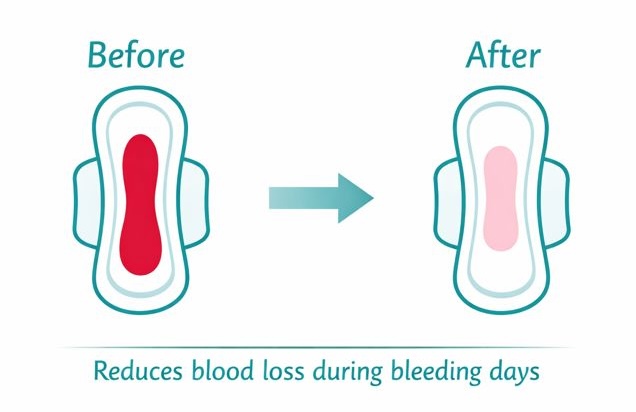
Tranexamic acid helps stabilise clotting within the lining of the uterus, which means less blood loss during the days you bleed. It does not act as contraception and does not “switch off” periods completely.
- Taken only during bleeding (not every day)
- Works within hours
- Often reduces blood loss by about a third to a half
How to take it
I’ll advise a dose based on your history and any other medication you use. In general, it’s taken on the heavy days only, for up to five days in a cycle.
What matters most: you should see a meaningful reduction in bleeding. If you don’t, we reassess the cause and the next step rather than just repeating the same plan indefinitely.
When we avoid tranexamic acid
- Previous blood clots (DVT/PE) or significant clotting risk
- Severe kidney disease
- Bleeding that has not been assessed
Other non-hormonal options
Anti-inflammatory tablets (NSAIDs)
These can reduce prostaglandins, often improving cramps and reducing bleeding for some patients.
Iron replacement
If heavy bleeding has caused iron deficiency, treating iron is essential to restore energy and prevent ongoing symptoms.
What I’ll check before prescribing
- Your bleeding pattern and how it affects daily life
- Symptoms and blood tests for anaemia/iron deficiency (when appropriate)
- Any personal or family history suggesting increased clot risk
- Whether an ultrasound is needed (for fibroids, polyps, adenomyosis)
- Red flags such as bleeding between periods or after menopause
My aim is a plan that is both effective and safe: what improvement we expect, when to review, and what we do next if bleeding remains heavy.
FAQs
Will it stop my period completely?
No. It reduces blood loss, but it doesn’t switch periods off.
Can I use it if I’m trying to conceive?
Yes. It does not affect ovulation and is taken only during bleeding days.
What if it doesn’t help enough?
Then we reassess the cause and consider other options (including an IUD, targeted treatment for fibroids/polyps, or hormonal options when appropriate).