
Patient education
Endometrial polyps
Endometrial polyps are a common cause of bleeding or spotting. Most are benign, but we take the right cases seriously and remove them when it’s safer or more useful to do so.
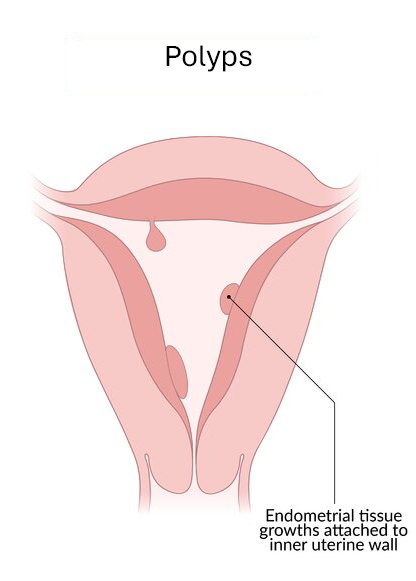
Quick take
If you have bleeding between periods, heavier periods than usual, or postmenopausal bleeding, an endometrial polyp is one of the common “structural” causes we look for.
What is an endometrial polyp?
An endometrial polyp is a localised overgrowth of the uterine lining (endometrium) that projects into the uterine cavity. Polyps can be single or multiple and vary in size.
Symptoms
- Bleeding between periods or spotting
- Heavier or prolonged periods
- Unpredictable bleeding patterns
- Bleeding after sex (sometimes)
- Postmenopausal bleeding (always needs assessment)
- Fatigue or symptoms of low iron (if bleeding is heavy)
- No symptoms (incidental finding)
How it’s diagnosed
Step 1
Ultrasound
Transvaginal ultrasound is usually the first investigation when abnormal bleeding is the concern.
Step 2
Hysteroscopy
Hysteroscopy can better outline a focal lesion inside the cavity.
Step 3
Targeted sampling (when needed)
Endometrial sampling is used when indicated, but a “blind” biopsy may not sample the polyp itself. Hysteroscopy allows diagnosis and treatment together.
Cancer risk (and who is higher risk)
Most endometrial polyps are benign. The risk of malignancy is low overall, but higher in selected patients, especially after menopause and in those with bleeding or other risk factors.
Treatment options
Treatment depends on symptoms, ultrasound findings, and risk factors. Some patients can monitor. Others are better served by removal.
Observation
Selected low-risk, asymptomatic patients may be monitored.
Hysteroscopic polypectomy
The preferred treatment for most symptomatic polyps. Removal is targeted and tissue is sent for histology.
Bleeding control
Medical treatment may help bleeding symptoms while planning definitive management when appropriate.
Hysteroscopy & polypectomy
This is a minimally invasive procedure performed under direct vision. It allows precise removal of the polyp and histological assessment.
Polyps and fertility
Many clinicians remove polyps in patients trying to conceive, particularly before intrauterine insemination (IUI). Decisions in IVF cycles are more individual.
FAQ
Can polyps recur?
They can, but recurrence is uncommon. If bleeding returns, we reassess rather than guessing.
If your bleeding is not normal for you, don’t ignore it. We can usually identify the cause quickly and build a sensible plan.