
Absent periods cause
Functional hypothalamic amenorrhoea (FHA)
FHA means periods stop because your body is under pressure, most often from under-fuelling, high training load, stress, or weight change. It is common, treatable, and often reversible with the right plan.
Quick definition
We call this FHA only after checking for other common causes of missed periods, such as pregnancy, thyroid problems, high prolactin, PCOS, or early menopause (POI).
If you want the bigger overview of all missed-period causes, see Absent periods.
FHA is a body-response pattern, not a personal failure
Different people can reach the same endpoint (missed periods) through different mixes of under-fuelling, stress, and training load.
Energy-mismatch dominant
Most of the signal comes from under-fuelling relative to daily demand.
Stress-dominant
Psychological stress is a major driver, often alongside subtle energy mismatch.
Mixed pattern
Most people have overlap between nutrition, activity load, sleep, and stress.
Important: FHA can occur at different body sizes. The key issue is energy availability and stress load, not one number on the scale.
At a glance
- FHA is a common cause of periods stopping after they were previously present.
- Periods can return with targeted recovery support.
- Bone protection matters while periods are absent.
- Treatment is individualized and reviewed over time.
What we know about why FHA happens
FHA is usually a temporary downshift in period-control hormones when the body senses pressure.
- Low energy availability: intake does not match what your body is using.
- Exercise load: high training without enough recovery can suppress ovulation.
- Stress biology: ongoing stress can disrupt normal hormone rhythms.
- Individual sensitivity: some people are more vulnerable than others.
This is why plans work best when they are practical, tailored, and reviewed regularly.
How FHA can affect periods
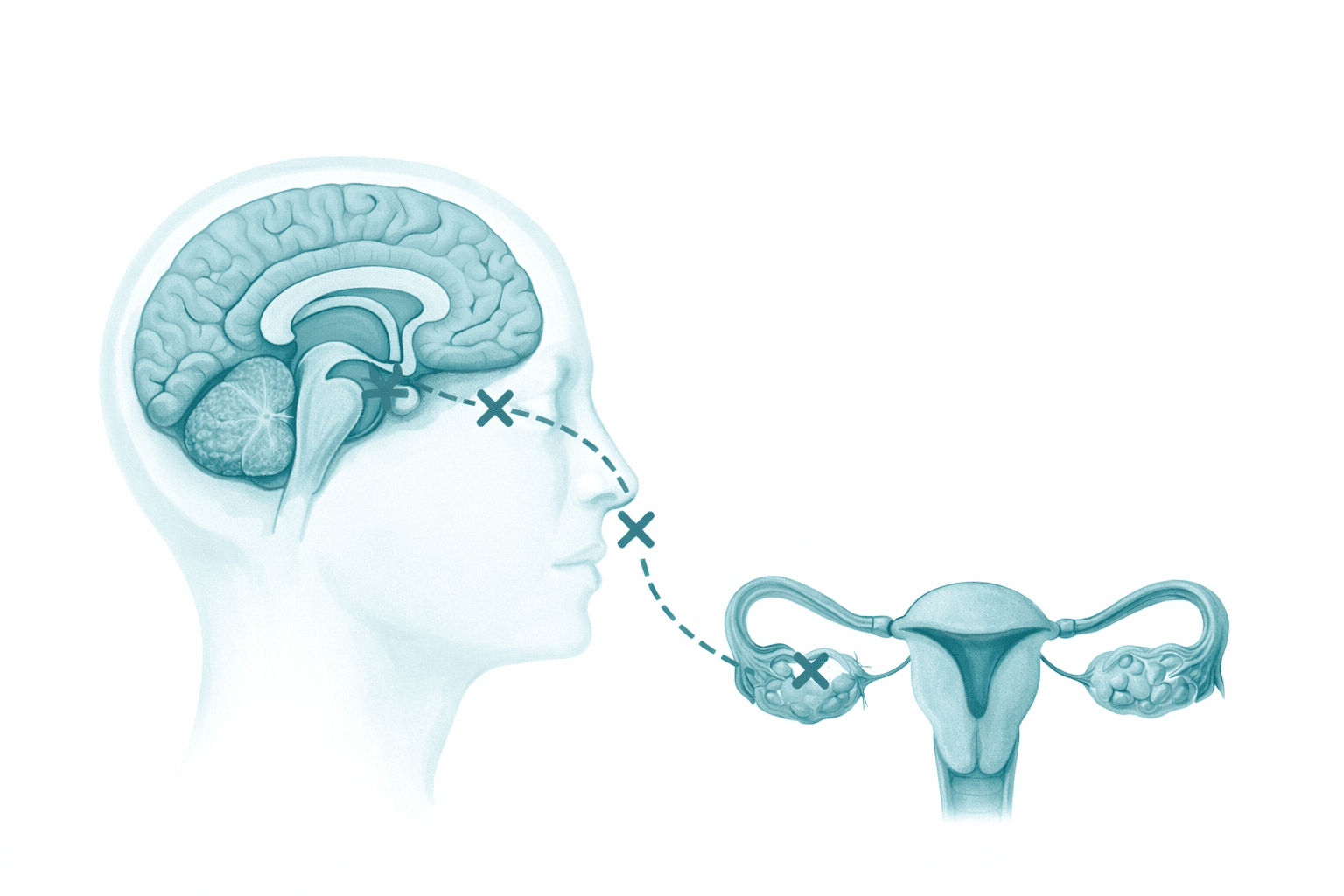
In FHA, your body is under pressure and brain hormone messages can slow down. This can lower estrogen and make periods stop.
Common pressure patterns
Low energy for your body’s needs
Your body is using more energy than it can recover from over time.
Stress
Ongoing stress can interfere with normal period-hormone signals.
High exercise load
High training with limited recovery can switch period signals down.
Mixed pattern is common: many people have overlap across all three.
Shared mechanism
Brain period signals slow down
This lowers estrogen. Eggs may not mature properly, so ovulation and periods can pause.
This is the main hormone change in FHA.
What you may notice
Periods can become far apart or stop.
It can be harder to predict fertile days, so pregnancy may take longer.
Low-estrogen symptoms can happen (for example dryness, sleep changes, or hot flushes).
If FHA continues, bone strength can be affected, so early support is important.
Key point: Different pressure patterns can lead to the same result: lower estrogen and fewer periods. The good news is this often improves with the right plan.
- Why did my periods stop? In FHA, brain hormone messages can slow down. This lowers estrogen and can pause ovulation and periods.
- Can this improve? Yes. Many people recover cycles with practical nutrition, stress, and training adjustments.
- Why treat early? Early care helps symptoms settle sooner and protects bone health.
How we assess FHA
Step 1
Rule out pregnancy and urgent causes
A pregnancy test is always first. We then screen for red flags and other medical causes of absent periods.
Step 2
History of energy, training, stress, and cycle pattern
We map food intake, exercise load, stress, weight changes, and your period timeline in detail.
Step 3
Blood tests and hormone pattern
Tests help exclude thyroid, prolactin, PCOS, POI, and other causes, and check if estrogen levels are low.
Step 4
Bone and scan checks when needed
If periods have been absent for over 6 months (or sooner in higher-risk cases), we consider bone density testing and targeted imaging.
Treatment focus: practical options by goal
The first goal is to restore regular hormone signaling by correcting the underlying energy and stress load.
Re-fuel your body
Eat enough for your day and reduce output where needed so your body can restart regular cycle signals.
Balance training and recovery
You may still be active, but your training, sleep, and fuelling need to match each other.
Stress and wellbeing support
Talking support (for example CBT) can help if stress, restrictive eating, or body-image worry is blocking recovery.
Protect bone health during recovery
Calcium and vitamin D are often used while core recovery is underway.
Hormone support in selected cases
If periods do not return after a reasonable recovery trial, body-identical estradiol patch with progesterone may be considered.
Fertility pathway (if trying now)
If pregnancy is a current goal and egg release has not returned, specialist ovulation treatment can be discussed.
Bone and long-term health
Low estrogen over time can affect bone strength. This is why FHA care is not only about getting periods back.
- Bone density (DXA) is considered if periods are absent for more than 6 months, or earlier in higher-risk situations.
- Calcium and vitamin D support are usually part of the plan, but not the only treatment.
- The main treatment for bone health is recovery of energy balance and menstrual function.
Fertility and future planning
FHA causes an egg-release problem, so it can delay conception while active. For many people, fertility returns once cycles recover.
If pregnancy is a current goal and egg release has not returned, we can discuss specialist ovulation treatment after your health and energy plan is stabilized.
Next step: if your periods have stopped for 3+ months, early assessment helps protect bone health and shortens time to the right treatment plan.
Common questions
Frequently asked questions
Do I have to be underweight to have FHA?
No. FHA can happen at different body sizes. The key issue is energy availability and stress load, not one number on the scale.
Is FHA permanent?
Often no. Many people recover cycles with a structured plan that improves fuelling, recovery, and stress management.
How long does period recovery take?
It varies. Some people recover in a few months, others need longer. We track progress and adjust the plan over time.
Why do bone checks matter if I feel okay?
Bone loss can happen quietly with low estrogen. Early assessment helps protect bone health while your cycles recover.
Can I still get pregnant in future?
Yes, many people can. Fertility often improves once ovulation returns, and specialist fertility options are available if needed.
Still unsure? Bring your cycle history, exercise pattern, and eating pattern to your visit so we can build a realistic recovery plan.