Patient education
Cesarean scar defect (niche)
A cesarean scar defect (also called a “niche” or “isthmocele”) is one possible cause of persistent spotting or abnormal bleeding after a prior C-section. Most women with a previous C-section do not have this problem, but when the bleeding pattern fits, it’s worth checking properly.
Quick take
If you have post-menstrual spotting (brown discharge for days after your period ends), or “mysterious” ongoing bleeding after a C-section, a niche is one of the structural causes we actively look for.
What it is
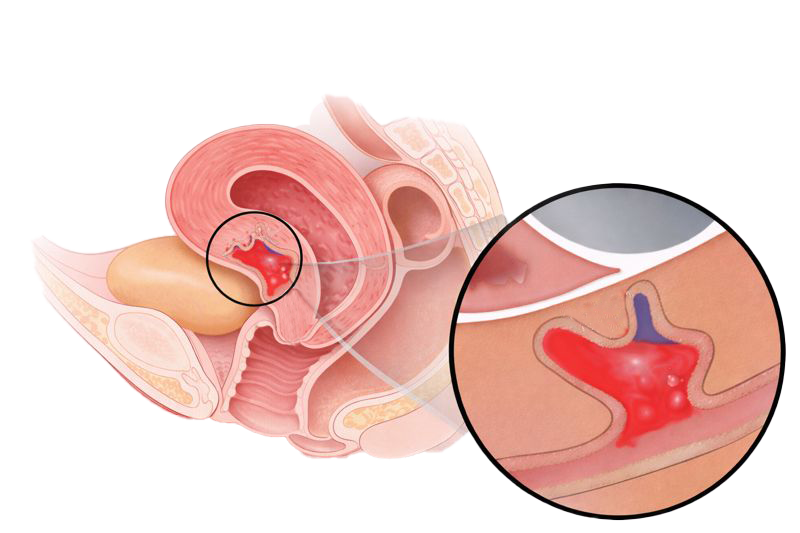
A cesarean scar defect is a thinning and indentation of the muscle wall (myometrium) at the site of the previous uterine incision, due to incomplete healing. It is also called a niche, isthmocele, or uteroperitoneal fistula.
These defects are more common after multiple C-sections, likely because existing scar tissue affects healing of a new incision.
Symptoms & bleeding patterns
The classic symptom is post-menstrual spotting (bleeding or brown discharge for days after your period should have ended). Other symptoms can include pelvic pain, painful periods (dysmenorrhea), and pain with sex (dyspareunia).
Not everyone has symptoms. The point is: when the bleeding pattern fits, we consider it and confirm it properly.
How it’s diagnosed
Step 1
History + pattern
We focus on timing: spotting after the period, persistent bleeding, and whether this started after a C-section.
Step 2
Ultrasound
A transvaginal ultrasound can often identify a niche, especially when we’re specifically looking for it.
Step 3
Rule out other causes
Because spotting has several possible causes, we also check cervix, lining, polyps/fibroids, and hormonal patterns where appropriate.
Why it can cause spotting
In simple terms: a niche is an indentation in the scar area. Blood can collect there and then slowly leak out afterwards, which can look like “endless” spotting.
Fertility & future pregnancy
Potential complications linked with cesarean scar defects include secondary infertility and (rarely) uterine rupture.
They can also be associated with cesarean scar pregnancy (a distinct condition that needs urgent specialist care).
Treatment options
Treatment depends on your symptoms, scan findings, and future pregnancy plans. Options can include observation (if mild), medical bleeding control, or a procedure aimed at addressing the niche when it’s clearly the cause of ongoing symptoms.
Key point: we treat the patient and the pattern, not the scan alone.
FAQ
Is it dangerous?
Usually it’s a quality-of-life issue (persistent spotting). The reason we take it seriously is because symptoms can overlap with other problems, and in future pregnancy planning we want a clear, safe plan.
If I have spotting, does it definitely mean I have a niche?
No. Spotting has multiple causes. A previous C-section just adds one more item to the checklist of likely structural causes.