
Absent periods cause
Thyroid and other endocrine causes
Thyroid hormone imbalance, especially an underactive thyroid, can disturb cycle timing and sometimes stop periods. The good news is this is usually identifiable with blood tests and has a clear treatment pathway.
Quick definition
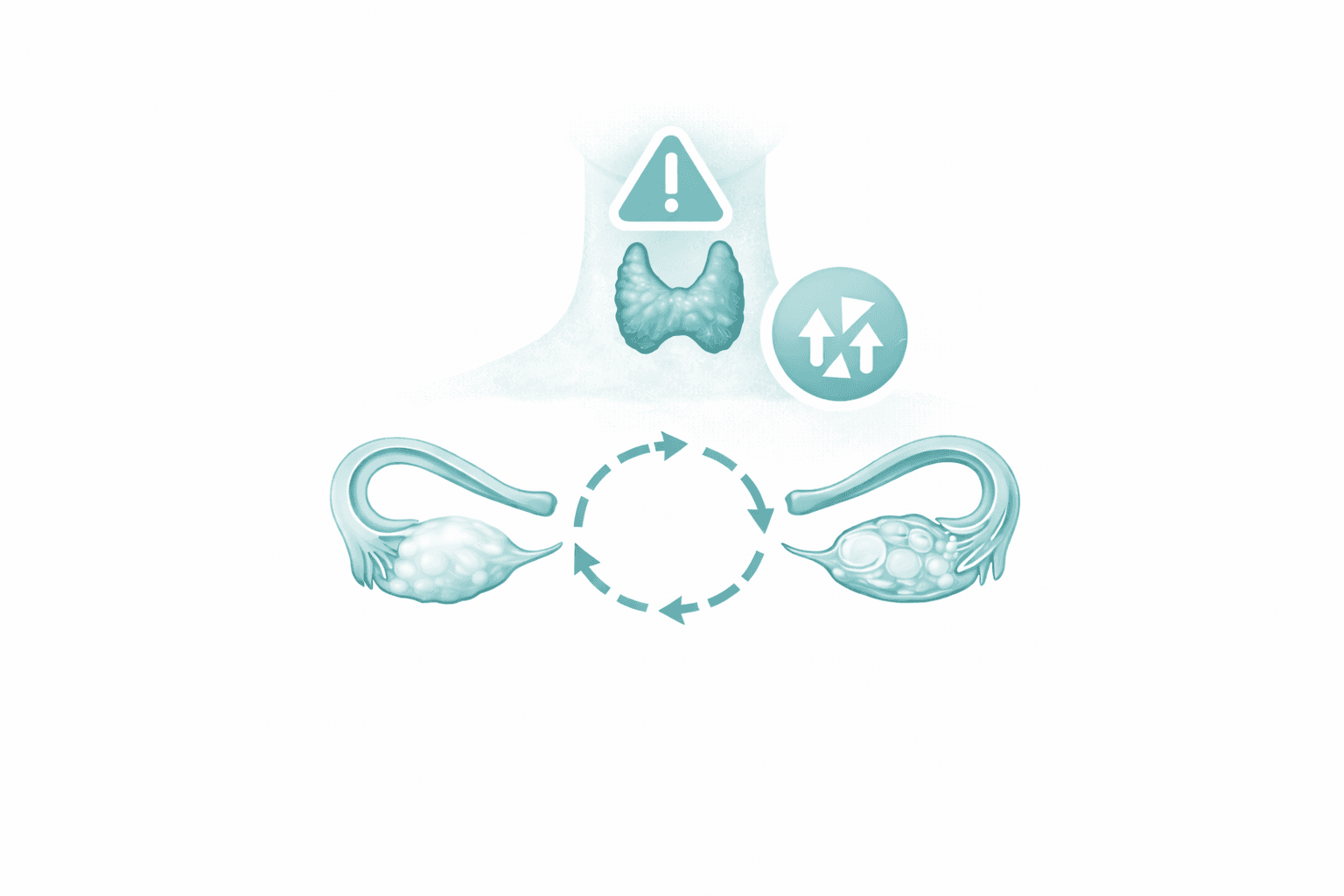
When thyroid hormone is too low (or occasionally too high), brain-ovary hormone signaling can shift. This can lead to irregular periods, very infrequent periods, or absent periods.
If your main concern is absent periods overall, see Absent periods for the full pathway.
When to seek urgent care
- Positive pregnancy test with one-sided pain, shoulder-tip pain, faintness, or bleeding.
- Very heavy bleeding with dizziness, faintness, or shortness of breath.
- Rapidly worsening symptoms (severe weakness, confusion, chest pain, or collapse).
If you are unsure, contact reception or your nearest emergency centre.
At a glance
- Thyroid imbalance is a common and treatable endocrine reason for cycle disruption.
- Underactive thyroid can be linked with infrequent periods, absent periods, and lower fertility.
- In hypothyroidism, higher prolactin can occur and can further suppress periods in some people.
- Treating thyroid first is usually the key step before deciding on extra hormone interventions.
Why thyroid and endocrine signals affect periods
Periods depend on coordinated signaling between the brain, thyroid, ovaries, and uterus. If thyroid hormone is out of range, cycle timing can shift and ovulation may become less predictable.
Underactive thyroid (common)
Can slow metabolic and reproductive signaling, causing longer cycles, no periods, and reduced fertility in some patients.
Prolactin overlap
Hypothyroidism can be associated with elevated prolactin, which can itself switch periods off.
Other endocrine contributors
If thyroid tests are normal, we check other hormone pathways so treatment is matched to the true cause.
Key point: this is not about willpower. If endocrine signals are disrupted, cycles can change even with stable routines.
Symptoms that can travel with thyroid-related cycle changes
Cycle symptoms
Irregular periods, longer gaps between periods, absent periods, or in some cases heavier bleeding.
General hypothyroid symptoms
Fatigue, feeling cold, constipation, slower thinking, dry skin, and weight change can be clues.
Reproductive impact
Some people notice delayed conception, and miscarriage risk can be higher if thyroid function remains untreated.
How we assess thyroid and endocrine causes
Step 1
Clinical history and timing
We map cycle pattern, pregnancy possibility, symptoms, and medicines before ordering targeted tests.
Step 2
First blood tests
Usually includes pregnancy test, thyroid panel (TSH and free T4), and often prolactin.
Step 3
Broader hormone checks if needed
If thyroid is not the full explanation, we check ovarian and other endocrine pathways to avoid missing overlap causes.
Step 4
Reassess after treatment starts
Cycle recovery can take time. We recheck symptoms and bloods to confirm the pathway is improving.
Treatment options
Treatment is cause-based. For hypothyroidism, thyroid hormone replacement (levothyroxine) is usually the foundation.
Restore thyroid balance
Thyroid replacement is titrated to blood tests and symptoms. This often improves cycle timing and fertility potential.
Treat overlap endocrine causes
If prolactin or other endocrine factors are also driving absent periods, those are treated in parallel.
Cycle support where needed
If periods remain very infrequent, cycle-protection or bleeding-management options may be added while endocrine care continues.
Practical point: cycle improvements may be gradual. Early follow-up helps adjust treatment safely and avoid long untreated gaps.
Fertility and planning
Thyroid balance is part of preconception care. If pregnancy is a goal, optimize thyroid and cycle pattern early, then reassess ovulation and timing support.
- Correcting thyroid function can improve conception chances in many patients.
- If cycles remain absent, we expand evaluation so treatment does not stop at one diagnosis.
- If pregnant or trying to conceive, thyroid follow-up intervals are usually closer.
Common questions
Frequently asked questions
Can an underactive thyroid stop periods?
Yes, it can. Some people develop infrequent or absent periods when thyroid hormone is too low.
Will periods always return once thyroid is treated?
Many people improve, but not everyone normalizes immediately. If periods do not return, we check for overlapping causes.
Why is prolactin sometimes checked too?
Hypothyroidism can be associated with raised prolactin, and high prolactin can also switch periods off.
Could thyroid be the whole reason for fertility delay?
It can be a major contributor. We treat thyroid first, then reassess ovulation and add support only if needed.
Do symptoms outside periods matter?
Yes. Symptoms like fatigue, cold intolerance, and constipation can be useful clues for diagnosis and follow-up.
Still unsure? Bring your symptom timeline and any recent blood tests so we can make a clear endocrine plan at your first visit.