
Absent periods cause
High prolactin (hyperprolactinemia)
High prolactin can switch periods off and affect ovulation. The good news is that this is usually diagnosable with focused tests and often responds well to treatment.
Quick definition
Prolactin is a hormone made by the pituitary gland. If prolactin stays high, period and ovulation signals can switch down.
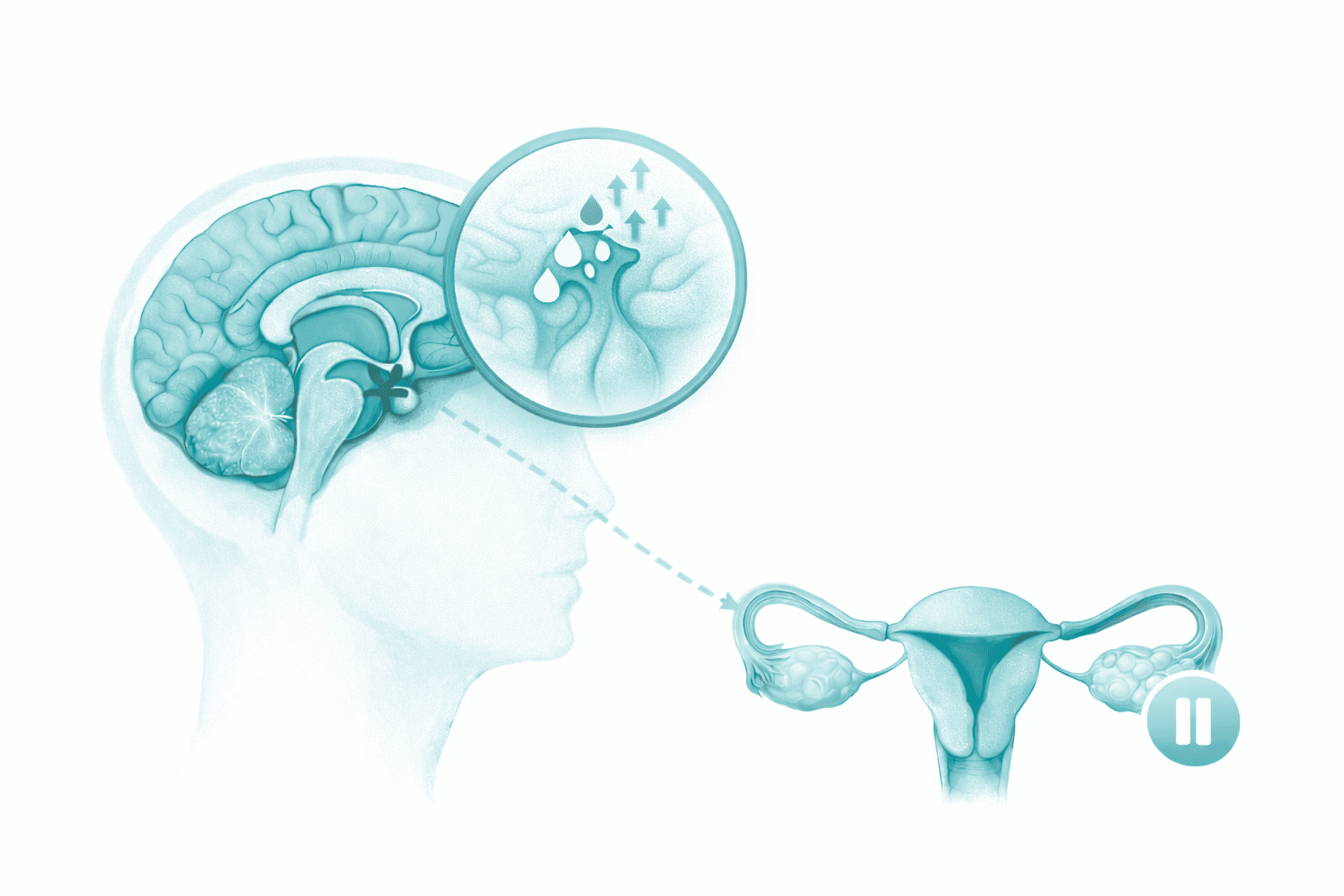
You can also view the broader pathway on Absent periods.
When to seek urgent care
- New severe headache with visual change (blurred side vision, double vision, or sudden visual loss).
- Severe vomiting, dehydration, or sudden collapse with severe headache.
- Pregnancy plus severe headache or visual symptoms.
- Any rapid worsening of neurologic symptoms.
If you are unsure, contact reception or your nearest emergency centre.
At a glance
- High prolactin is a common, treatable reason for missed periods.
- Medication causes are common and should always be checked early.
- Most people do not need surgery; medicine is usually first-line when treatment is needed.
- Cycle and fertility often improve once prolactin normalizes.
Common causes
High prolactin has more than one cause. We focus on finding the right cause first so treatment is accurate.
Medication-related
Some medicines can raise prolactin (for example some antipsychotics, anti-nausea, or antidepressant medicines).
Pituitary prolactinoma
A benign pituitary growth can make too much prolactin. Most are manageable with medicine.
Other medical causes
Pregnancy, breastfeeding, thyroid underactivity, and chronic kidney disease can all raise prolactin.
Important: one mildly high prolactin result is often repeated before final decisions, because stress and sampling conditions can affect levels.
What you may notice
Cycle changes
Periods can become far apart, very light, or stop. Ovulation may also stop.
Breast discharge
Some people notice milky nipple discharge (galactorrhea), though not everyone does.
Low-estrogen symptoms
Vaginal dryness, lower libido, or hot flushes can happen if periods stay absent.
Headache or vision symptoms
These are less common but important, especially with higher prolactin and larger pituitary lesions.
Fertility timing changes
Without regular ovulation, conception may take longer until prolactin is treated.
No obvious symptoms
Some people only discover high prolactin during tests for missed periods or fertility concerns.
How we assess high prolactin
Step 1
Confirm pattern and rule out pregnancy
We review cycle history and symptoms, and pregnancy testing is always first when periods are missed.
Step 2
Repeat prolactin and review medicines
Prolactin is often repeated and interpreted with your medication list, because medicine effects are common.
Step 3
Check thyroid, kidney, and hormone context
Blood tests help identify reversible causes and whether low-estrogen effects are present.
Step 4
Pituitary MRI when indicated
MRI is used when prolactin remains high without a clear cause, or if there are headache/vision red flags.
Lab note: very high prolactin can occasionally require specialized lab handling to avoid under-reading in large pituitary lesions.
Treatment options
Treatment is based on cause, symptoms, and your goals (cycle recovery, fertility now or later, and long-term hormone health).
Treat the underlying cause
If a medicine is driving prolactin up, we coordinate safe alternatives where possible. If thyroid is the cause, treating thyroid often normalizes prolactin.
Dopamine-agonist medicine
For prolactinomas or persistent symptomatic elevation, medicine is usually first-line. Cabergoline is commonly preferred; bromocriptine is an alternative.
Surgery (selected cases)
Surgery is uncommon and reserved for specific situations, such as intolerance or non-response to medicines, or urgent compression issues.
Most people improve with medicine-based care. We track symptoms, prolactin levels, cycles, and imaging only when needed.
Fertility and cycle recovery
When prolactin normalizes, ovulation and periods often return, and fertility usually improves.
- We align treatment with whether pregnancy is a current goal.
- If pregnancy is planned, timing and medicine decisions are individualized.
- If pregnancy is not planned, we still protect cycle and hormone health.
Common questions
Frequently asked questions
Does high prolactin always mean a pituitary tumor?
No. Medication causes are common, and thyroid or other medical causes can also raise prolactin.
Will I definitely need an MRI scan?
Not always. MRI is used when prolactin stays high without a clear cause, or if symptoms suggest pituitary pressure effects.
Can treatment bring periods back?
Often yes. Many people see cycle and ovulation recovery once prolactin is controlled.
Is cabergoline usually first choice?
For many patients, yes. It is often effective and better tolerated, with alternatives available if needed.
Can high prolactin affect fertility?
Yes, because ovulation may pause. Fertility usually improves when prolactin is treated and ovulation returns.
Still unsure? Bring your medication list, cycle history, and previous blood tests so we can map a clear next-step plan.