Urogynaecology | Bowel problems
Rectocele, stool trapping, and posterior compartment symptoms
A rectocele means the front wall of the rectum bulges into the back wall of the vagina. In some women that creates a pocketing or support problem where stool collects instead of emptying smoothly.
Not every blocked-emptying story is a rectocele story, and not every rectocele needs surgery. But when splinting, stool trapping, and a posterior bulge genuinely match the anatomy, the right posterior repair can help a great deal.
What it is
What a rectocele usually means in real life
A rectocele is not just a label on a scan or an examination. The real question is whether the back-wall support problem is actually creating a stool-trapping pattern that matches what you feel.
Seeing it
This is the structural part of the story
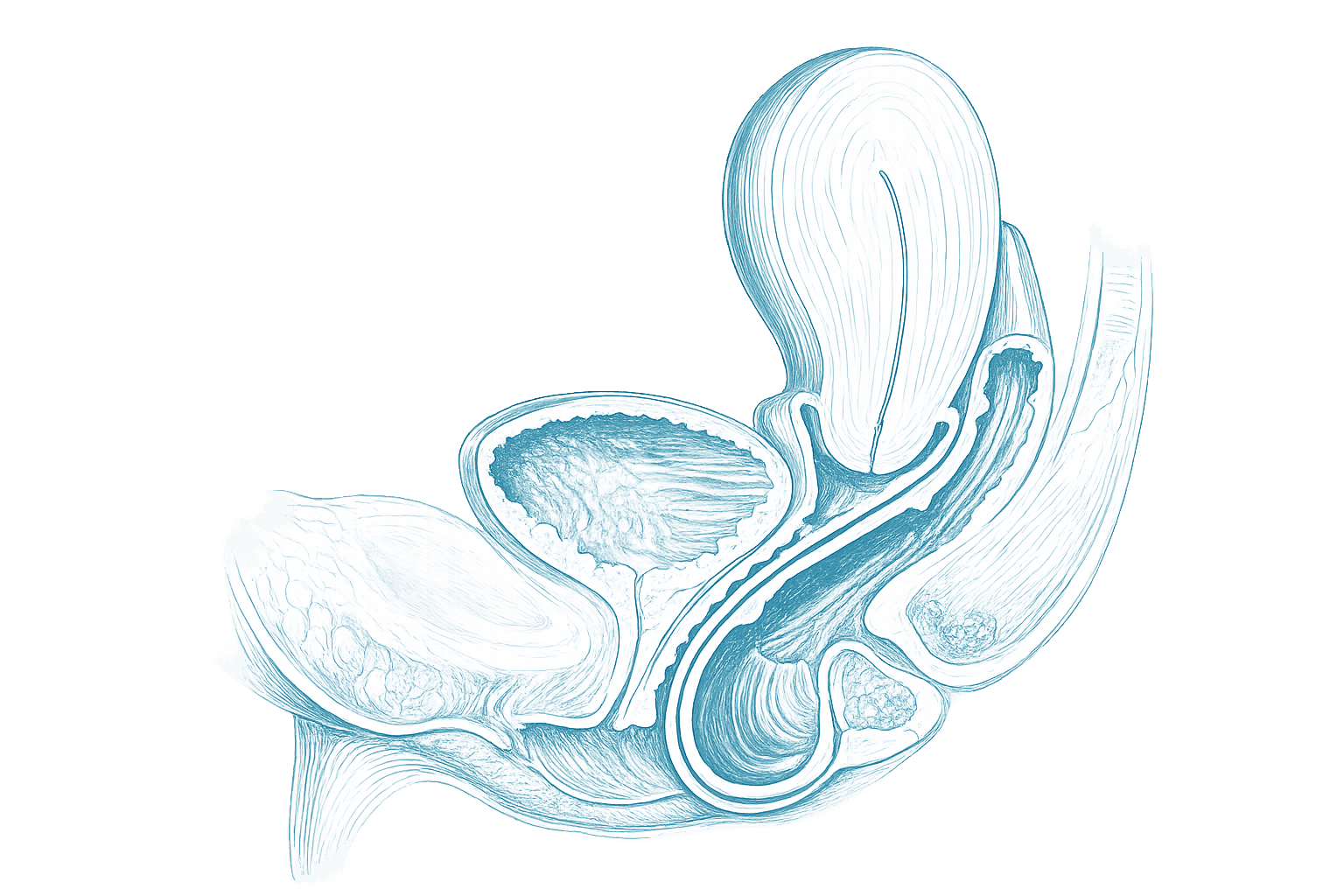
In a rectocele, the front wall of the rectum bulges into the back wall of the vagina. In some women that creates a pocket where stool can sit instead of clearing smoothly.
Definition
The rectum can bulge forward into the back wall of the vagina
That can create a pocketing effect where stool collects instead of clearing properly, especially when the support and emptying mechanics are both under strain.
What it feels like
Women often describe stool trapping, splinting, and repeated trips
You may feel a posterior bulge, the need to press on the vagina or perineum, or the sense that stool is left behind even after you have tried to empty.
Not the same thing
A rectocele is not the same as simple constipation or pure outlet dysfunction
Hard stool, slow bowels, and pelvic floor non-relaxation can all overlap, but a rectocele adds a structural pocketing problem that changes how the bowel empties and how treatment should be planned.
Treatment logic
Not every rectocele needs repair, but the right repair can help a lot
The decision should follow symptoms, stool trapping, splinting, and how well the anatomy matches the story, not just whether the word rectocele appears in the report.
The key question is not only “is there a rectocele?” but whether the rectocele is truly the reason stool is getting trapped and emptying is failing.
Assessment
How I usually work out whether the rectocele is really driving the symptoms
The aim is to decide whether this is mainly a posterior support problem, a functional emptying problem, a constipation problem, or a mixed picture that needs more than one route.
Step 1
The symptom pattern usually gives the first big clue
I want to know about splinting, stool trapping, repeated trips, bulge awareness, time on the toilet, constipation overlap, and whether prolapse or bladder symptoms are travelling with the same story.
Step 2
Examination is central, because the anatomy and the wider prolapse picture have to match the story
I examine the posterior vaginal wall, perineal body, and the rest of the prolapse picture to see whether the anatomy genuinely fits the stool-trapping and splinting symptoms you are describing. Posterior symptoms often sit inside a broader prolapse story rather than in isolation, so I usually want the front wall, top support, and overall prolapse plan thought through at the same time.
Step 3
Perineal ultrasound can make the posterior compartment clearer
In selected women it helps me show what is happening on screen, correlate symptoms with the posterior compartment more clearly, and distinguish rectocele from a more mixed support story.
Step 4
Constipation and outlet dysfunction still need honest attention
A rectocele does not make those other mechanisms disappear. If hard stool or a non-relaxing outlet are really leading, repair alone can disappoint.
The best assessment usually decides whether the route should stay functional, become more support-led, or move properly toward posterior repair.
First treatment steps
Where treatment usually starts when posterior support is part of the bowel problem
Many women do not start with surgery, but this page should also not undersell repair. The real question is whether constipation, outlet mechanics, support treatment, or posterior repair is the best match for the actual mechanism.
Treat the stool properly first if stool is still part of the blockage story
Hard stool and repeated straining make posterior symptoms harder to interpret and harder to improve.
Use bowel physio when outlet mechanics are clearly part of the picture
If the outlet is not relaxing well, the right physiotherapy and biofeedback can be central. Repair is not a substitute for retraining a non-relaxing outlet.
Read physio for bowelSupport treatment can be a sensible bridge in the right woman
A pessary or broader prolapse support route can sometimes reduce symptoms while clarifying whether surgery is really needed and whether posterior symptoms improve when support improves.
Posterior repair can help a lot when stool trapping, splinting, and anatomy truly match
This is not a last-resort afterthought. It is a real reconstructive option for the right posterior compartment problem, but it is not designed to fix every constipation or outlet dysfunction pattern.
The useful route is the one that matches the real mechanism. That matters more than whether the label sounds impressive, and it matters more than treating every posterior symptom as if surgery is either always needed or never helpful.
Next step
The useful next move is deciding whether the rectocele is truly the reason stool is getting trapped.
That is what makes the difference between a plan that stays functional, needs better bowel treatment, or genuinely moves toward posterior repair.
Frequently asked questions
Common questions about rectocele and stool trapping
What is a rectocele in plain English?
It means the front wall of the rectum bulges into the back wall of the vagina. In some women that creates a pocketing problem where stool collects instead of clearing smoothly.
Does splinting mean the rectocele matters?
Often it is a very useful clue, yes, but it still has to be interpreted alongside the rest of the story. Splinting helps most when there is genuine stool trapping or posterior support change, but it can also happen in more mixed patterns.
Can a rectocele and outlet dysfunction happen together?
Yes. That mixed pattern is common. Some women have a structural pocketing problem and a non-relaxing outlet at the same time, which is why repair alone is not always the whole answer.
When does posterior repair actually help?
It helps most when the anatomy and symptoms genuinely match: stool trapping, splinting, posterior bulge symptoms, and examination findings that all point in the same direction.
Will posterior repair fix ordinary constipation?
No. It is not designed to fix every constipation pattern. If hard stool, slow bowels, or outlet dysfunction are still the main drivers, those parts still need proper treatment too.